6-Month Poultry Vaccination Schedule
A structured six-month vaccination plan helps protect your flock from common poultry diseases and supports stronger growth, feed efficiency, and long-term farm performance.
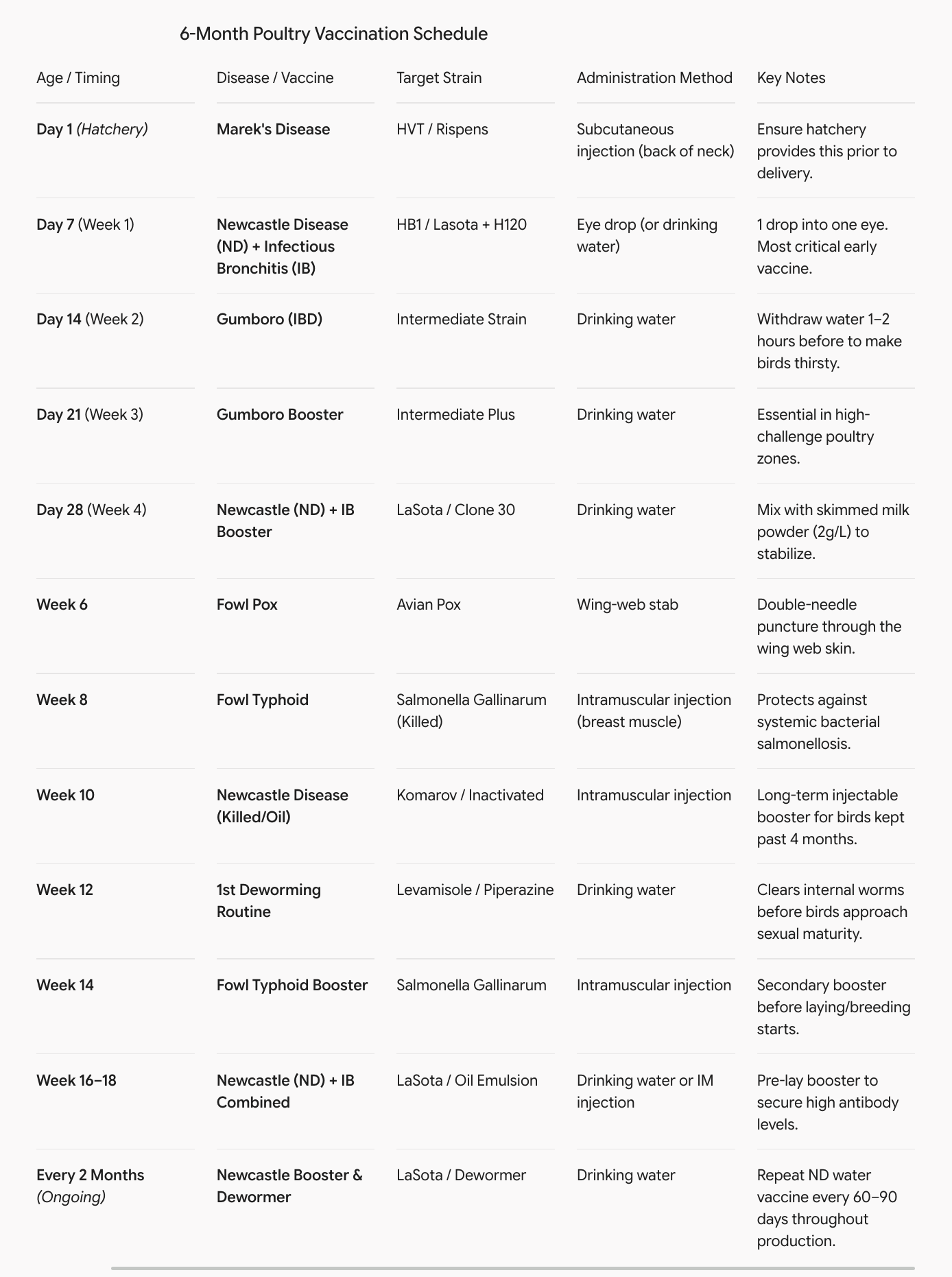
A well-planned vaccination programme is one of the most important investments a poultry farmer can make. Vaccinating on time reduces disease pressure, protects bird growth, and lowers the risk of costly losses during the production cycle. Use this six-month schedule as a guide and confirm timings, strain, and administration with a qualified poultry veterinarian, especially where local disease pressure differs.
| Age / Timing | Disease / Vaccine | Target Strain | Administration Method | Key Notes |
|---|---|---|---|---|
| Day 1 | Marek’s Disease | Herpesvirus of turkeys (HVT) / recommended local strain | Subcutaneous or intramuscular injection | Administer at day-old or as soon as possible to protect early against Marek’s disease. |
| Day 7 | Newcastle Disease + Infectious Bronchitis | Lentogenic NDV + IBV strain | Eye drop or drinking water | This is a common early protection stage and should be done when chicks are healthy and drinking well. |
| Day 14 | Gumboro (IBD) | Intermediate IBD strain | Drinking water | Helps reduce the risk of infectious bursal disease during the early growing phase. |
| Day 21 | Gumboro Booster | Intermediate or recommended booster strain | Drinking water | Repeat dose strengthens immunity before the birds enter faster growth stages. |
| Day 28 | Newcastle + IB Booster | NDV booster strain + IBV booster strain | Eye drop or drinking water | Reinforces respiratory protection as the flock matures. |
| Week 6 | Fowl Pox | Poxvirus strain | Wing web stab or skin prick | Protects against pox outbreaks, especially where biting insects or contact exposure is high. |
| Week 8 | Fowl Typhoid | Salmonella gallinarum vaccine strain | Injection or oral route depending on product | Use as part of a broader biosecurity and sanitation programme. |
| Week 10 | Newcastle Disease | NDV booster strain | Eye drop or drinking water | Important for maintaining immunity before later production stress points. |
| Week 12 | 1st Deworming Routine | Routine worm-control programme | Oral administration in feed or water | Supports gut health, feed conversion, and overall flock performance. |
| Week 14 | Fowl Typhoid Booster | Booster strain as advised by vaccine supplier | Injection or oral route depending on product | A booster helps maintain protection against recurrent flock exposure. |
| Week 16–18 | Newcastle + IB Combined | NDV + IBV combined strain | Eye drop or drinking water | Usually timed to cover the grower phase and support respiratory health. |
| Every 2 Months | Newcastle Booster & Deworming | NDV booster strain + dewormer programme | Oral or drinking water depending on product | Repeat boosters and routine deworming are essential to maintain flock health over the production cycle. |
This vaccination schedule is intended as a practical guide for poultry farmers and should be adapted to local disease pressure, farm conditions, and the specific vaccine products being used. Strong health management, proper housing, biosecurity, and clean water access are just as important as vaccination itself.
Disclaimer: Vaccine timing, strain selection, and administration methods should be confirmed with a qualified poultry veterinarian. Local disease patterns, farm environment, and vaccine availability can vary, so farmers should adjust the programme to fit their specific flock health risks and veterinary recommendations.